Confidential by design
Confidential computing is designed so client documents are not accessible to Subnoto staff during signing workflows.

E-signature for lawyers and legal teams (2026)
Legal teams choose e-signatures for lawyers when confidentiality, auditability, and EU data posture stand up to client scrutiny. Subnoto keeps matter documents private during processing—not just at rest—while streamlining engagement letters, NDAs, and closings.
From first upload to signed matter files—see how Subnoto handles everyday legal workflows.
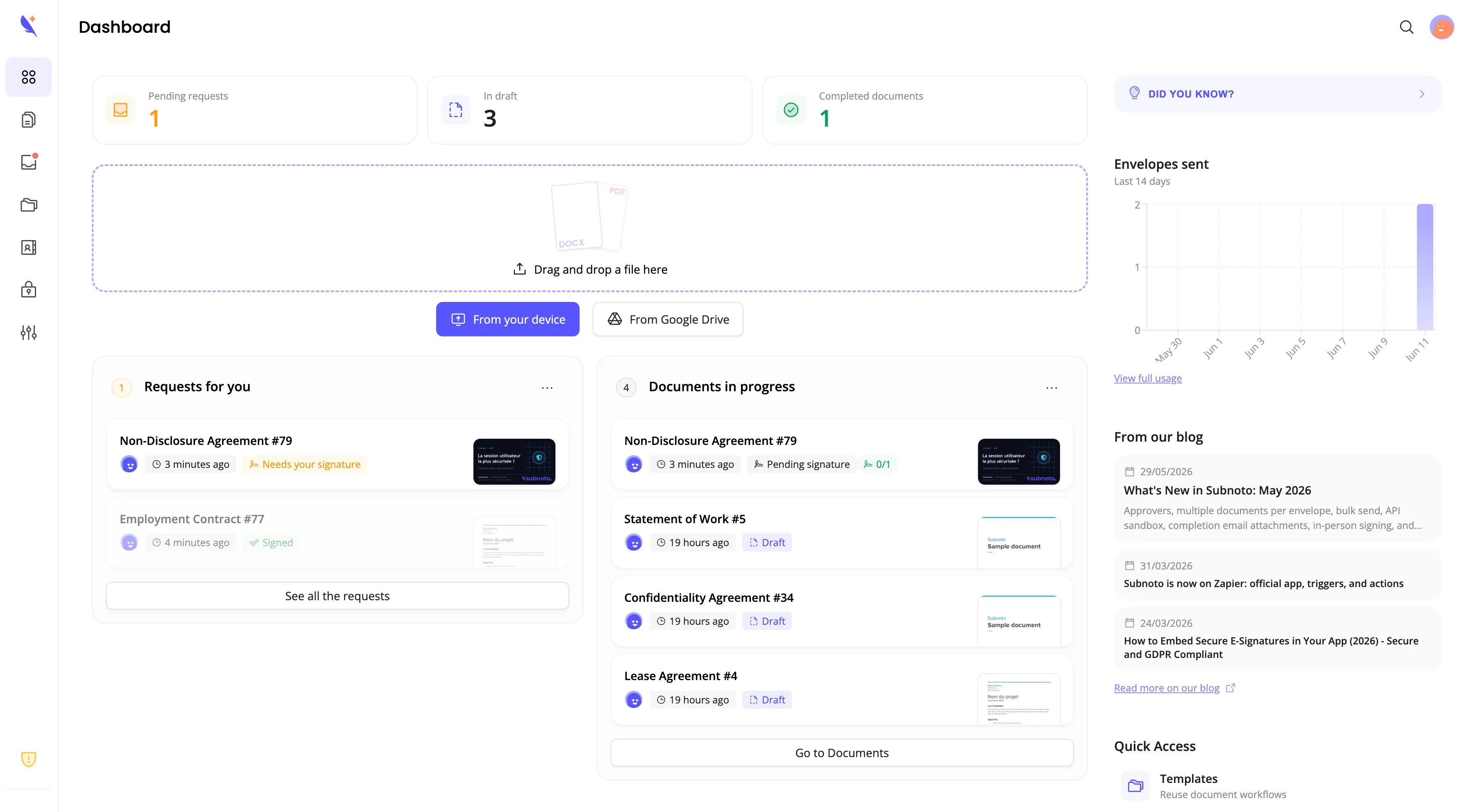
Upload engagement letters or NDAs, pick signers, and follow status without email chaos.
Read the guide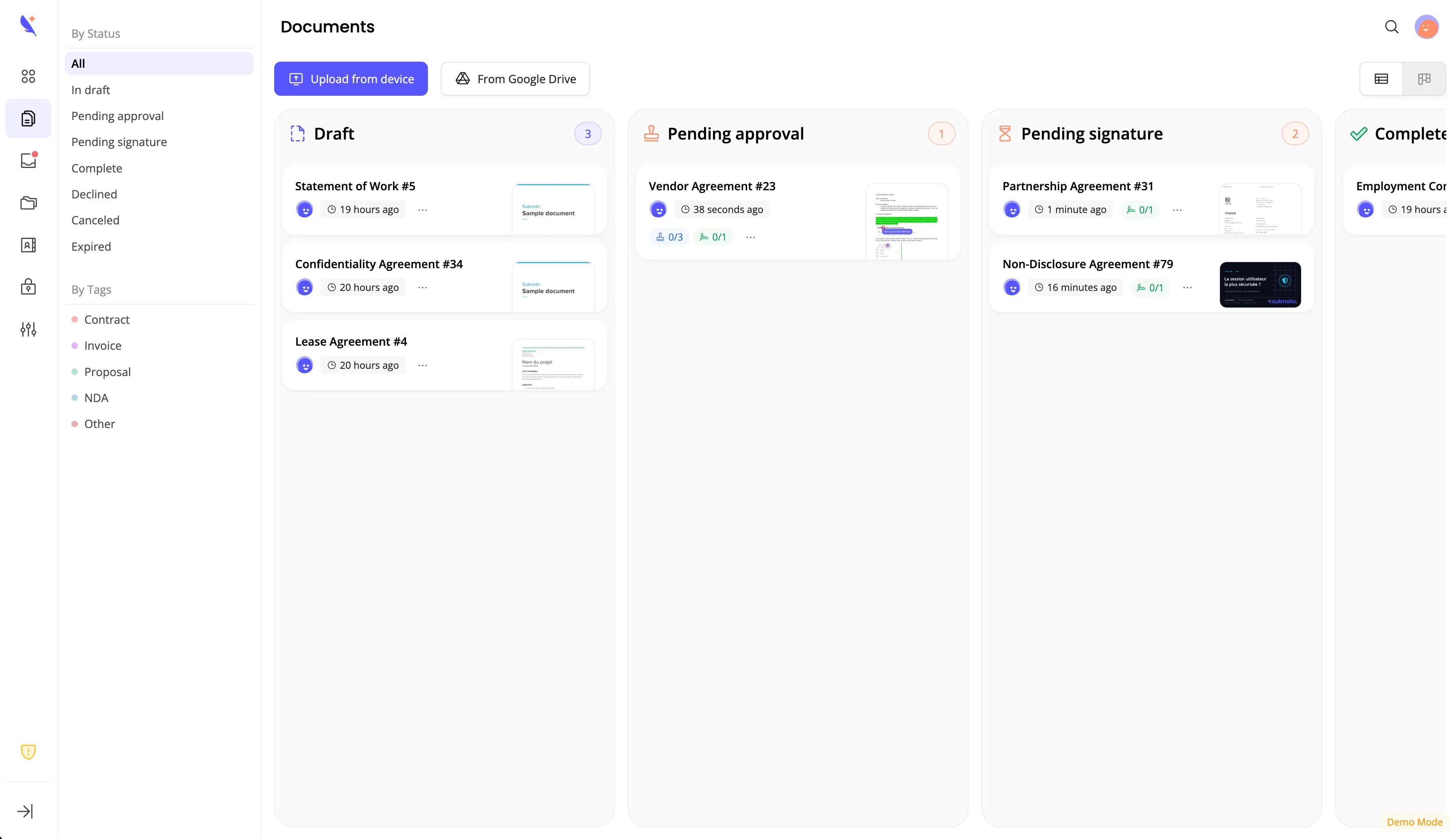
See drafts, pending signatures, and completed files on a clear board view.
Read the guide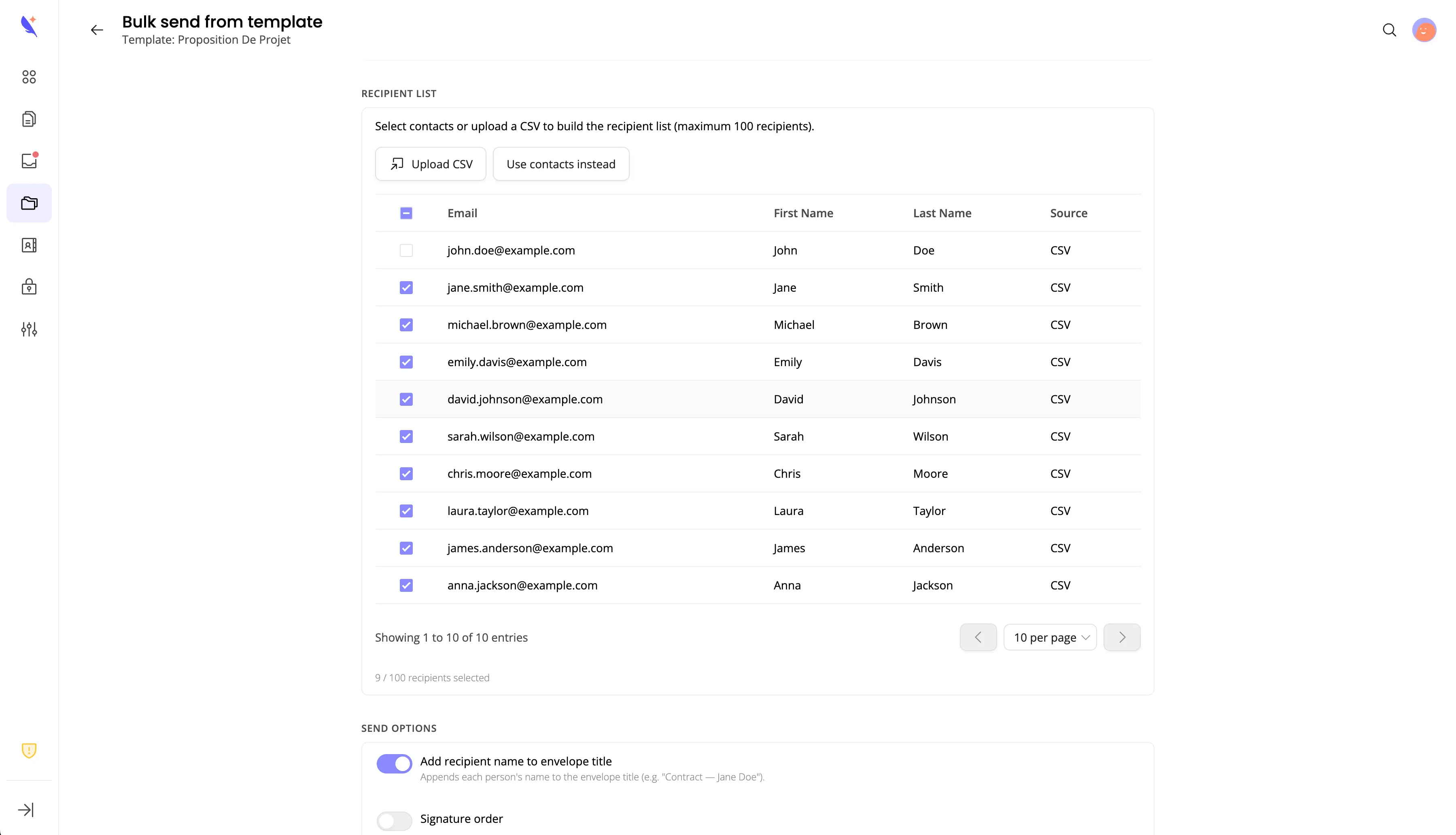
Send the same NDA or engagement pack to multiple clients from one template.
Read the guide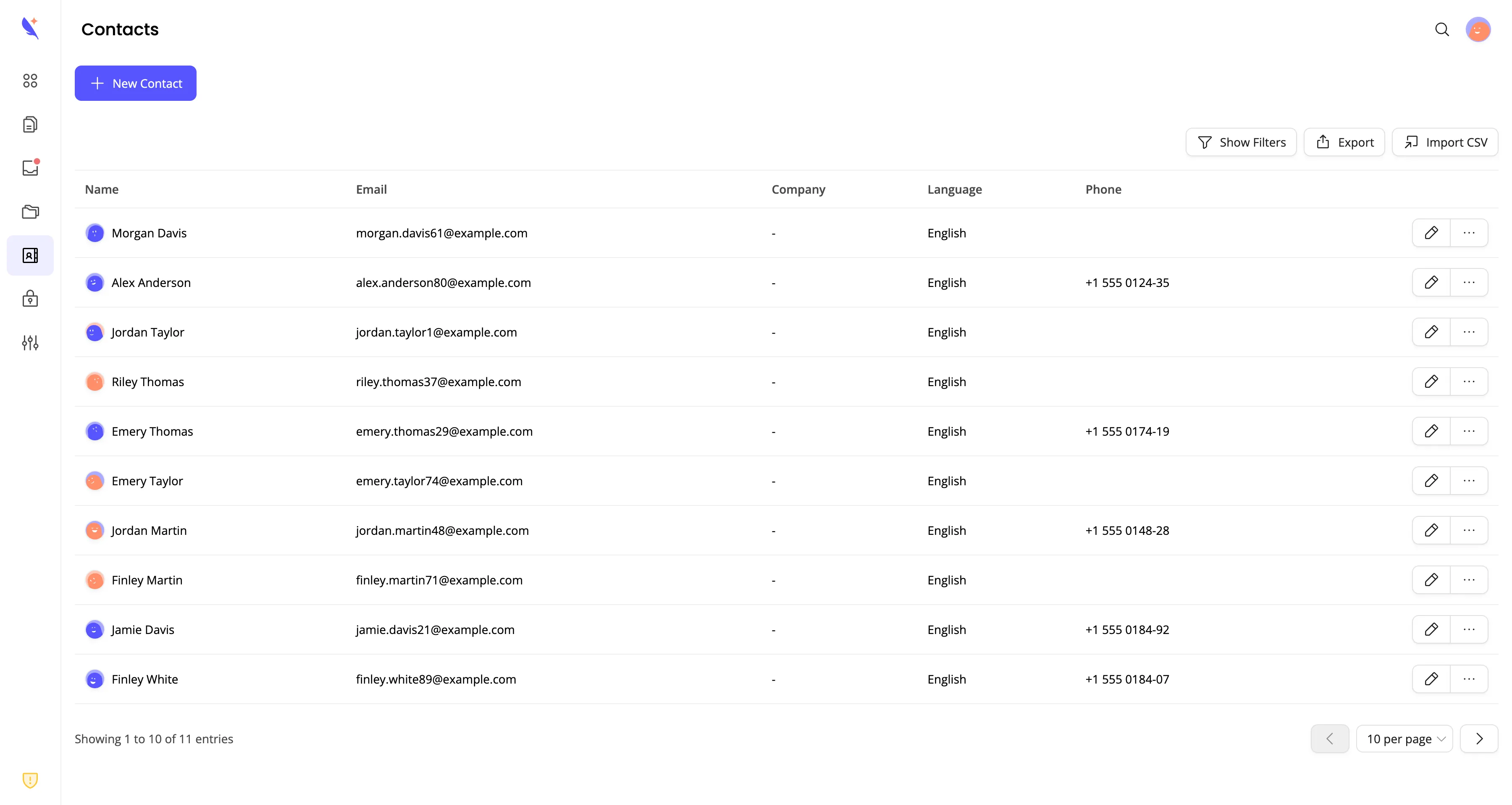
Keep counterparties and clients in one place. Import from a spreadsheet in minutes.
Read the guideMost e-signature tools were built for convenience, not legal accountability. They leave documents exposed to vendor access, insider threats, and unclear auditability. For legal professionals, this creates liability, regulatory risk, and potential client trust issues.
Confidential computing is designed so client documents are not accessible to Subnoto staff during signing workflows.
Comprehensive, tamper-evident logs that stand up under scrutiny.
Define who can view, approve, and sign each document.
Try Subnoto for free alongside your current tool and compare audit exports, hosting posture, and confidentiality claims.
Data remains local, helping you meet GDPR and regional compliance standards.
Draft, send, and execute legal agreements efficiently — without compromising enforceability or client trust.
NDAs, commercial contracts, engagement letters, board resolutions, corporate approvals, and cross-border document exchange requiring EU data residency.
Supports legal and client reporting with tamper-evident audit trails.
Our code is open for everyone to see and verify, ensuring complete transparency in our security practices.
Built with tamper-evident audit trails and verifiable system architecture that stands up to legal scrutiny.
Designed for European legal and data protection expectations, including GDPR-aligned hosting in France and evidence-oriented architecture suitable for eIDAS discussions with your counsel.
See pricing, deep security notes, European legality, sector pages, and alternatives: Pricing·Security·Signature legality·Book a demo·Best EU e-signature guide·Subnoto vs DocuSign·Subnoto vs Adobe Sign
Electronic signatures are widely recognized in the EU under eIDAS and national law, subject to document-specific rules. Some instruments require particular forms; your firm should decide the appropriate signature level. Subnoto focuses on evidence, confidentiality architecture, and EU hosting to support those decisions.
Prioritize minimized access to document content, strong audit trails, clear subprocessors, and EU residency where clients demand it. Subnoto’s confidential computing model is designed so the platform does not read matter documents during processing—addressing a common gap in legacy cloud e-sign.
Subnoto provides EU-based infrastructure (France), privacy-by-design processing boundaries, and documentation suitable for vendor assessments. You still complete firm-specific DPIAs and client questionnaires—but you get clearer answers on data flows than with opaque US-first tools.
Admissibility depends on jurisdiction, procedural rules, and how evidence is preserved. Modern e-signature audit logs and tamper-evidence often strengthen proof compared to informal scans. Preserve complete envelopes, timestamps, and identity evidence; involve local counsel for contested matters.
Yes—signers use browser-based flows optimized for mobile and desktop, which reduces friction for busy clients while retaining audit metadata your firm needs.
Not automatically. QES is a specific eIDAS concept for high-assurance scenarios. Subnoto targets strong confidentiality and auditability for everyday legal workflows; where QES is mandated, integrate those requirements into your matter playbook separately.
Start signing securely for free, review pricing for growing teams, or contact us for firm-wide rollout questions.

Privacy-friendly e-signatures made in France 🇫🇷
© 2026 Subnoto. All rights reserved.