Confidential by design
Confidential computing is designed to keep documents private during processing, including from routine platform access by Subnoto staff.

Secure e-signature for security teams (2026)
Security teams need e-signatures designed with security in mind—not marketing claims. Subnoto combines confidential computing, remote attestation, and EU hosting so you can show how documents stay private during processing, not just “encrypted at rest.”
Walk through the product flows your security questionnaire will ask about—upload, tracking, templates, and contacts.
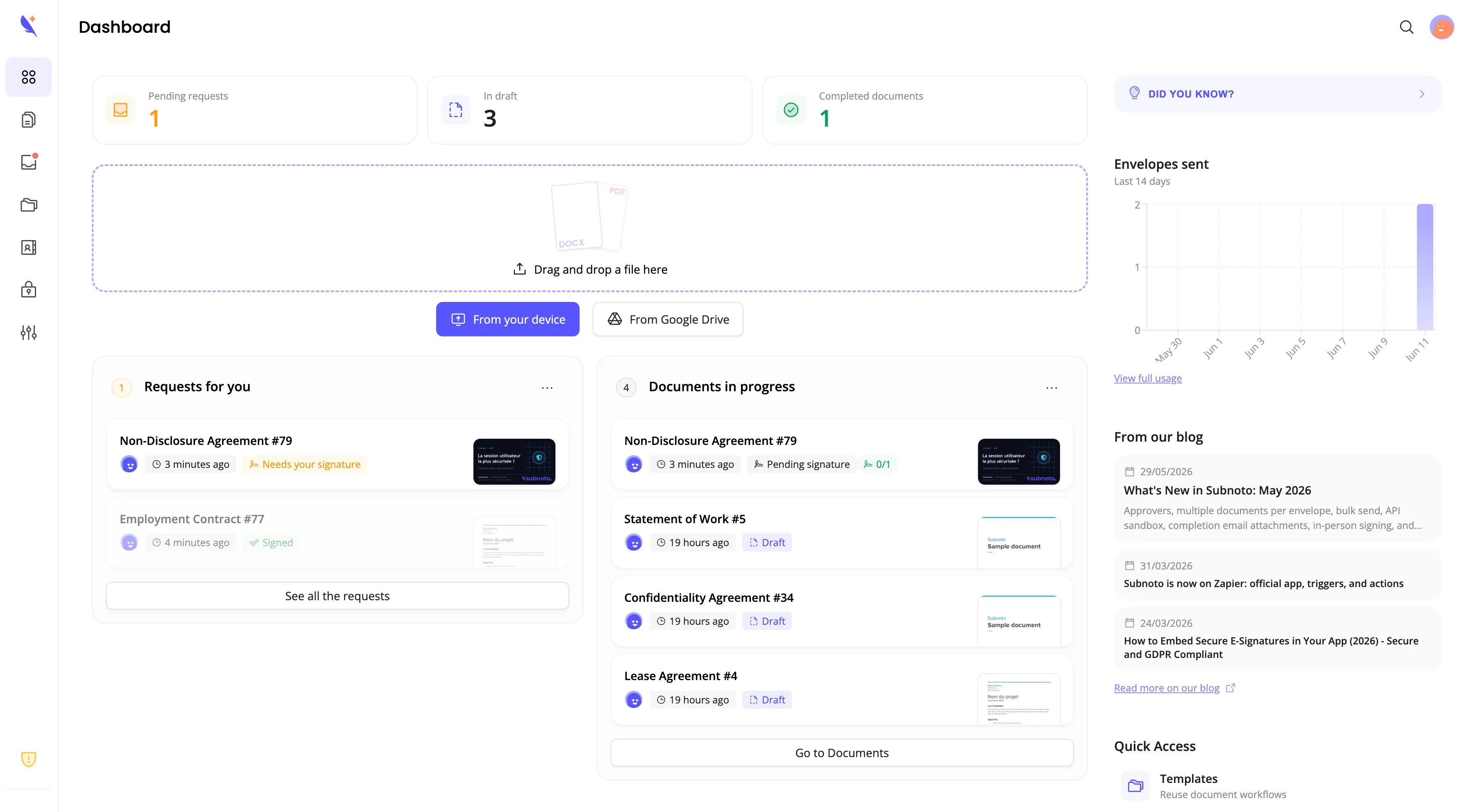
Upload documents, monitor pending signatures, and see what needs action without switching tools.
Read the guide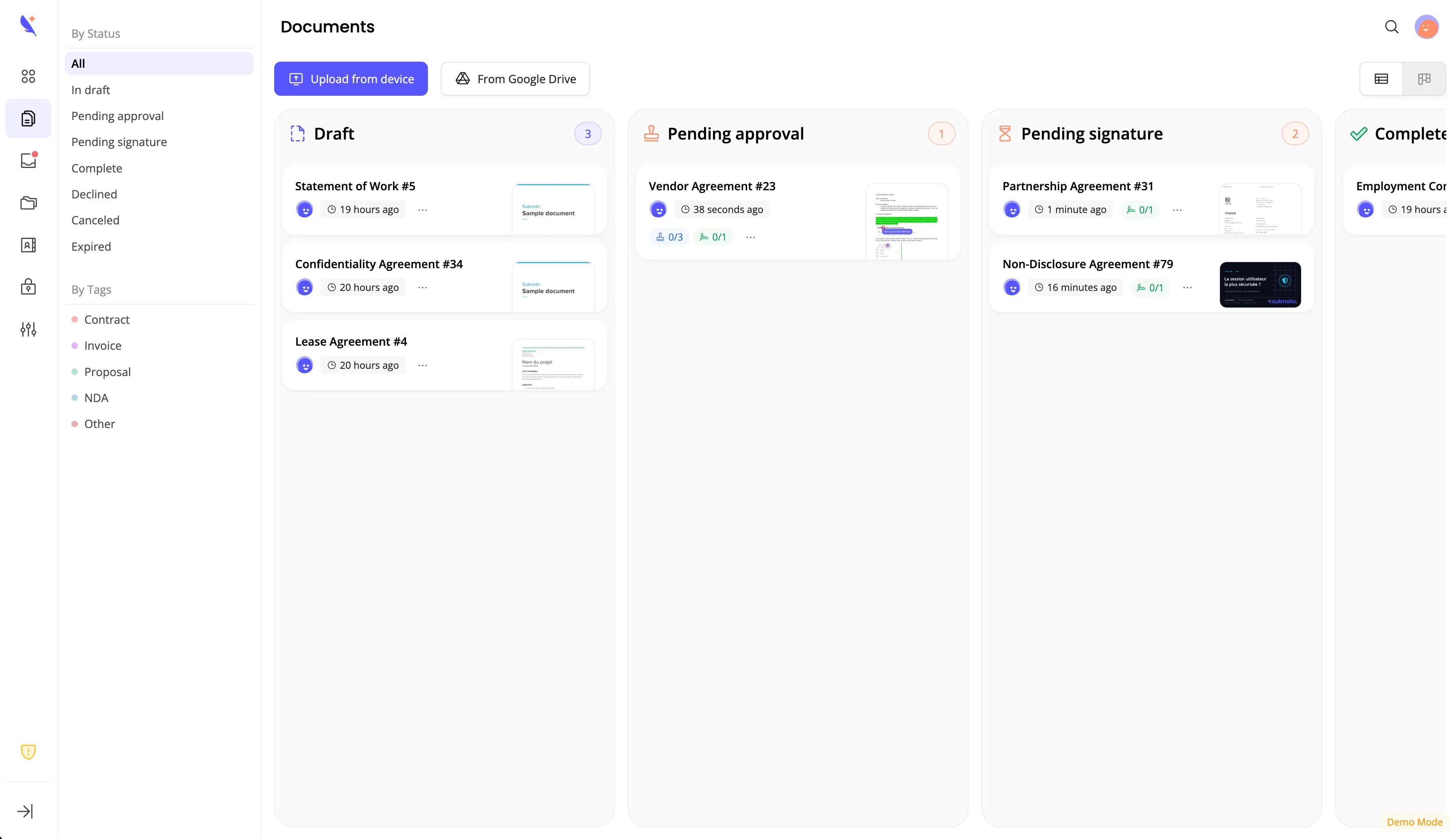
Audit-friendly visibility into draft, pending, and completed envelopes for security reviews.
Read the guide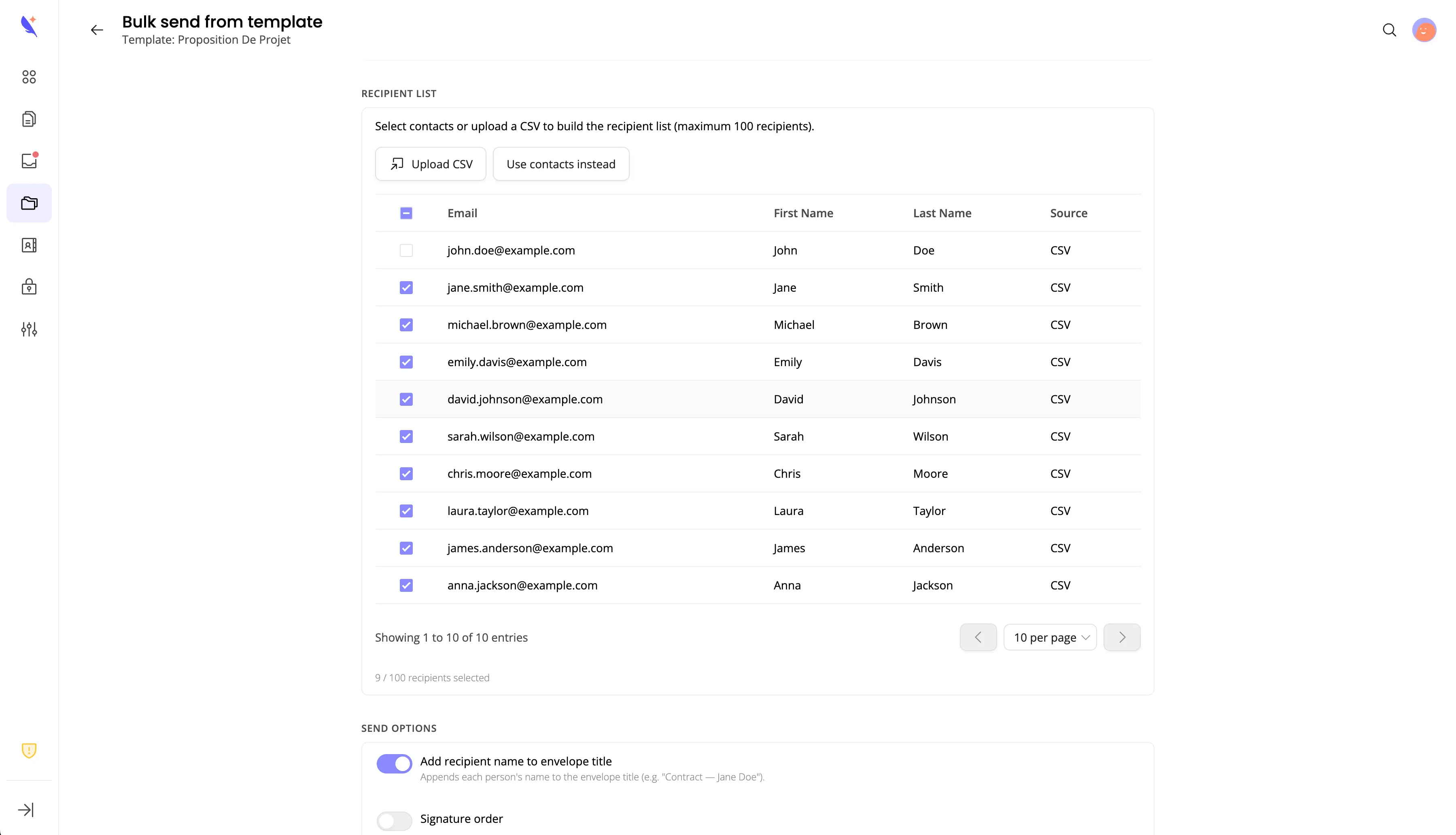
Repeatable workflows with CSV import—useful when assessing data handling at volume.
Read the guide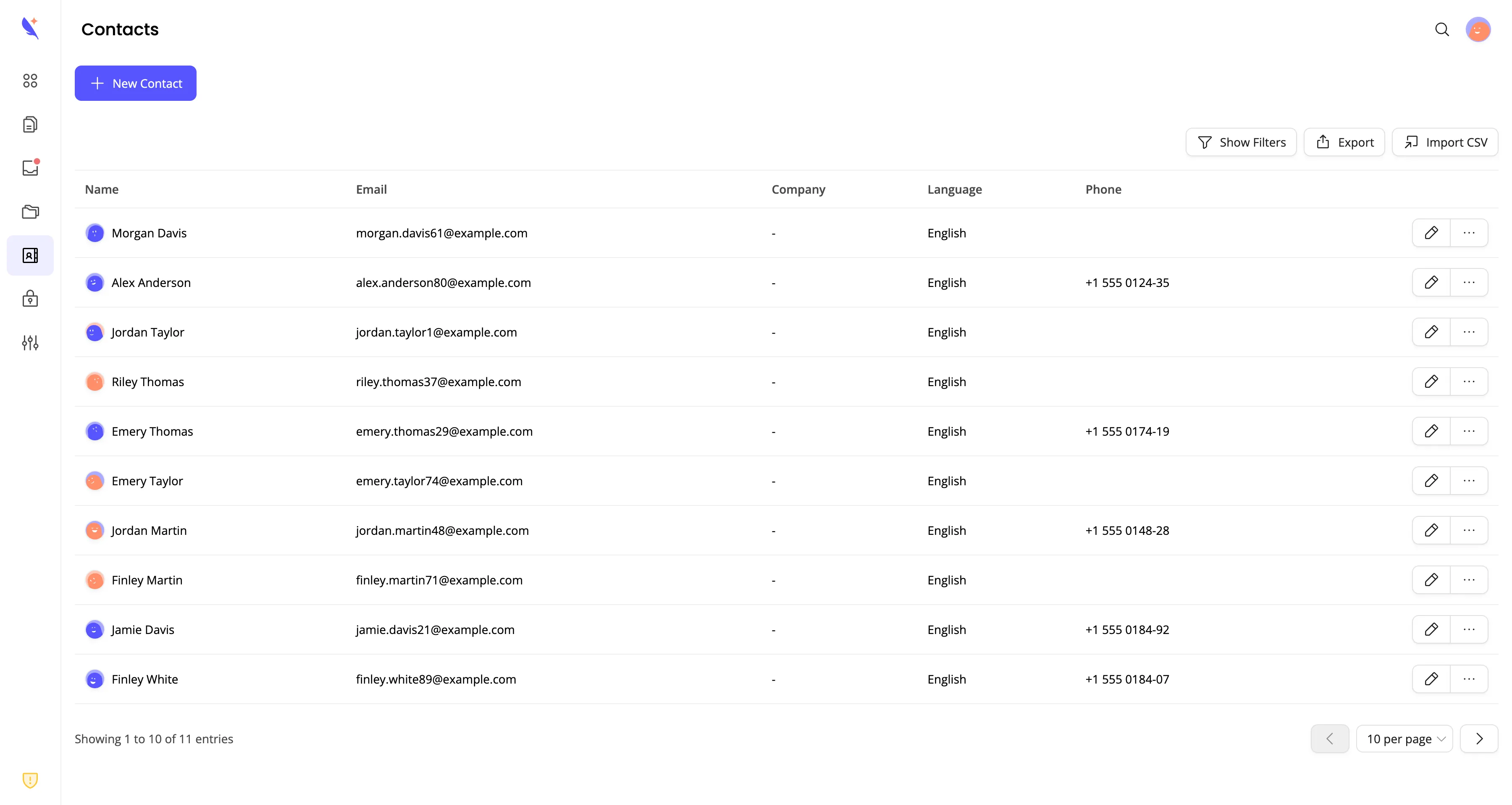
See how recipient data is stored, imported, and reused across envelopes.
Read the guideMost e-signature platforms stop at "encrypted in transit and at rest." What they don't show: what happens during processing. Documents may be exposed to vendors, admins, or third-party services — creating blind spots that make security professionals uneasy. Add opaque audit trails and complex compliance mapping, and a supposedly "secure" solution becomes a risk multiplier.
Confidential computing is designed to keep documents private during processing, including from routine platform access by Subnoto staff.
Remote attestation verifies code integrity and processing environments.
Transparent, tamper-evident audit trails provide near real-time visibility.
Start for free, run a side-by-side with your incumbent, and compare evidence packs—not slide decks.
Simplify GDPR, eIDAS, and ISO audit prep with clear evidence of data handling.
Eliminate admin and vendor visibility risks common in legacy tools.
Control who can prepare, approve, and sign with precision.
Signing contracts containing sensitive IP, HR agreements with personal data, board-level documentation, and third-party contracts where proof of non-access is critical.
Hardware-backed proof of execution integrity and processing environment security.
eIDAS certification roadmap and ongoing security assessments by third-party experts.
EU-hosted (France), with strict residency positioning and GDPR-aligned processing—pair with your legal review for eIDAS and sector-specific rules.
Dig into pricing, whitepaper-level security, European legality, and category comparisons: Pricing·Security whitepaper·Signature legality·Secure e-signature guide·GDPR e-signature guide·Subnoto vs DocuSign
Look for clarity on who can read documents during preparation, signing, and storage. Architectures that use confidential computing can keep content encrypted even during processing, reducing insider and vendor risk. Always map claims to evidence: attestation reports, data flow diagrams, and DPA language.
Those controls protect data on the wire and on disk, but many platforms still decrypt inside standard cloud VMs for processing. Subnoto’s approach targets the gap: processing inside hardware-backed confidential environments so the platform does not need plaintext access to document content.
Electronic signatures are widely used across the EU when form requirements are met. eIDAS defines levels of electronic signatures; not every contract needs a qualified signature. Your legal team should map document types to the appropriate level; Subnoto focuses on evidence and EU hosting to support those decisions.
Subnoto is hosted in France with a European operating model aimed at GDPR and residency expectations. You should still review subprocessors and transfer mechanisms in the DPA for your own compliance story.
Ask for data-flow narratives, admin access policies, subprocessors, breach history, key custody, and whether document plaintext is ever available to vendor staff. Request attestation or third-party review artifacts instead of accepting generic security badges alone.
Yes. Subnoto supports Single Sign-On with common identity providers (Google, Okta, Microsoft, and similar). SSO is included in the published web app plans—see the feature comparison on the pricing page. You also get audit logs on those tiers; passkeys and SMS authentication vary by plan. For large-scale directory automation (for example SCIM), custom retention, or formal procurement questionnaires, contact us.
Start signing securely for free, or contact us for architecture reviews and enterprise onboarding.

Privacy-friendly e-signatures made in France 🇫🇷
© 2026 Subnoto. All rights reserved.